
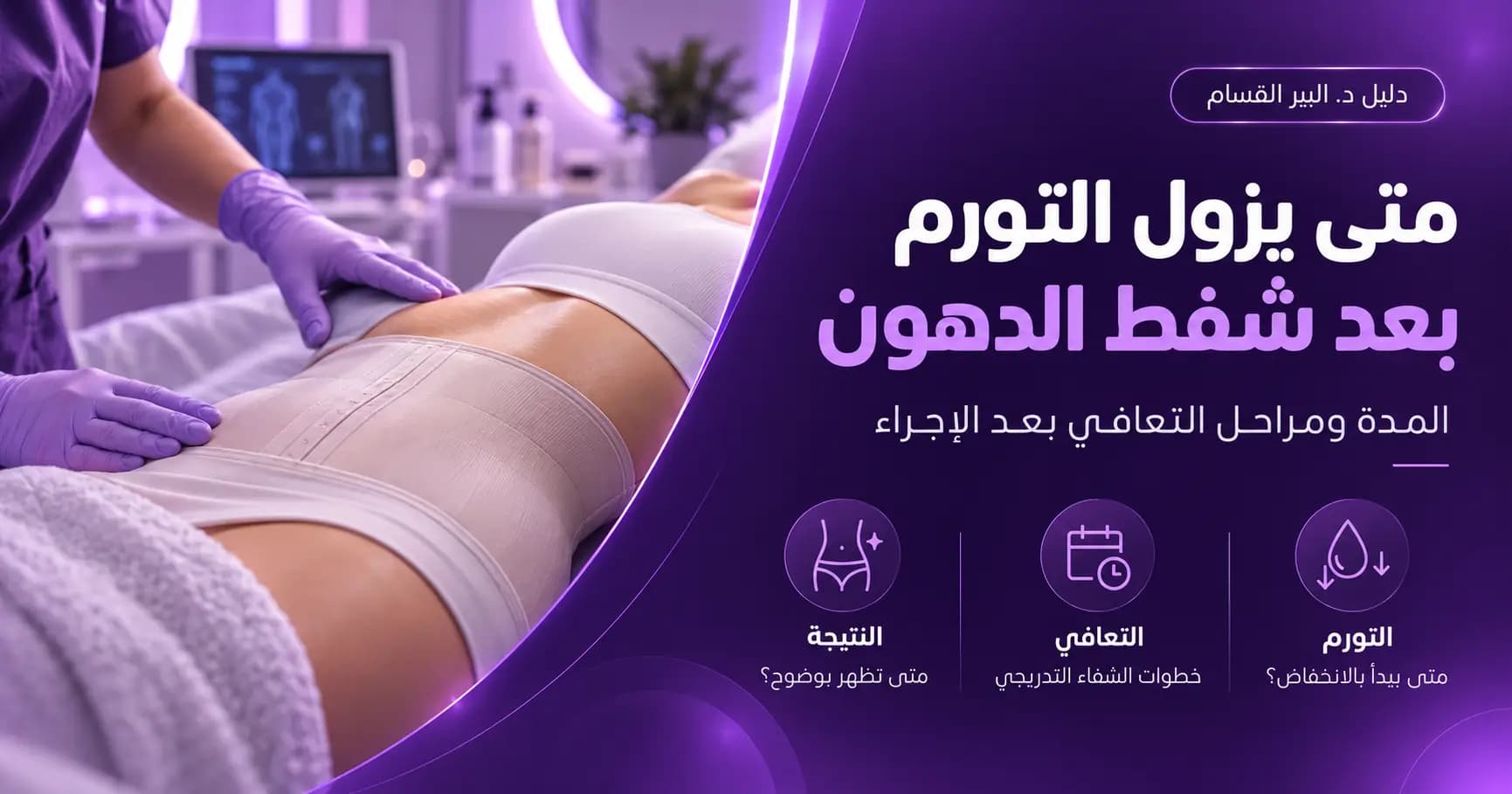
After liposuction, a new phase begins in which the patient waits to see the changes they sought from the procedure. However, swelling may make the results look different at first. Over time, the body gradually begins to recover, and the swelling subsides, allowing the treated area to become more clearly defined. This is where an important question arises: When does swelling go down after liposuction? And is it normal for some swelling to persist during the first few weeks?
Understanding the stages of recovery helps patients deal with swelling with greater reassurance and wait for the final result at the appropriate time. Dr. Albir Al Kassam brings his experience in body contouring procedures, with careful attention to evaluating each case and providing appropriate guidance for every patient. In the following sections, we explain the expected duration of swelling, the factors that affect how quickly it subsides, and how to manage it during the recovery period.
Swelling After Liposuction
Swelling after liposuction is a normal part of the recovery process. The body responds to the surgical procedure, and the tissues surrounding the treated area undergo temporary changes. Swelling may be noticeable during the first few days, then gradually begins to decrease as the tissues heal and recover.
The severity and duration of swelling vary from one person to another depending on the area treated, the amount of fat removed, and the individual characteristics of the body. Over time, the shape of the treated area begins to stabilize, and the results of liposuction become more apparent.
When Does Swelling Go Down After Liposuction?
When does swelling go down after liposuction? Swelling usually begins to appear during the first few hours after surgery and may be most noticeable during the first few days. It then gradually decreases as recovery progresses.
Swelling does not disappear at the same time for everyone. The body may need several weeks for the swelling to noticeably subside, while a small amount may persist for longer before the treated area reaches its final appearance.
During the First Week
Swelling is usually at its most noticeable during the first few days and may be accompanied by a feeling of tightness or heaviness in the treated area. During this period, the body's contours may not reflect the final result because of fluid retention and the normal swelling associated with healing.
From the Second to the Fourth Week
Swelling usually begins to decrease gradually. The treated area becomes more comfortable, and its shape starts to appear more clearly.
Some swelling or temporary unevenness may still remain, particularly in areas that underwent more extensive treatment.
After the First Month
A significant portion of the swelling subsides in many patients, although the final result may not yet be fully visible. Mild swelling or changes in skin texture may continue while the tissues are still healing.
Factors That Affect the Duration of Swelling
There is no fixed period in which swelling after liposuction disappears for every patient. Recovery time varies according to several factors related to the procedure and the individual characteristics of the body, including:
Amount of fat removed: The larger the procedure or the greater the amount of fat removed, the longer the body may need to recover.
Liposuction area: Recovery speed varies depending on the characteristics, size, and degree of tissue involvement in the treated area.
Number of treated areas: Performing liposuction on several areas during the same procedure may affect the duration of recovery and swelling.
Individual body characteristics: Tissue response and healing speed vary from person to person, which affects how long swelling remains.
Technique used: The degree of swelling and recovery period may vary depending on the liposuction technique and how the procedure is performed.
Following postoperative instructions: Adhering to the doctor's guidance regarding movement, compression garments, and care of the treated area can support a smoother recovery.
Fluid accumulation: Fluid buildup beneath the skin may cause swelling to persist for longer and should be assessed by the doctor if noticed.
Smoking and lifestyle: Smoking and certain lifestyle habits may affect tissue healing and recovery after surgery.
How Long Should a Compression Garment Be Worn After Liposuction?
The duration of wearing a compression garment after liposuction varies from one patient to another. It is usually recommended during the first few weeks after surgery, although some patients may need to continue wearing it for longer based on the doctor's assessment.
A compression garment is used to support the tissues, reduce swelling, and provide balanced pressure over the treated area. However, it should fit properly and should not be so tight that it causes pain, breathing difficulty, or changes in skin color.
The number of hours it should be worn each day and the total duration of use are determined according to the doctor's instructions. Therefore, patients should not stop wearing it or extend its use on their own without medical guidance.
Lumps After Liposuction
Lumps may appear after liposuction during the recovery period. In many cases, they are temporary and result from swelling, fluid accumulation, or changes in the tissues as they heal.
Patients may feel firm or uneven areas beneath the skin, particularly during the first few weeks. These areas often begin to improve gradually as swelling decreases and the tissues settle.
Some lumps may also be related to the distribution of remaining fat or the body's response to the procedure, so their nature varies from one person to another.
A medical evaluation is necessary if the lumps persist without improvement, become painful, or are accompanied by redness, warmth, or a noticeable increase in swelling. This helps determine the underlying cause and the appropriate way to manage it.
Skin Discoloration After Liposuction
Some people notice changes in skin color after liposuction, especially during the early stages of recovery. These changes may appear as bruising or shades of blue and purple that gradually turn green or yellow before the skin returns to its usual color.
This occurs because small blood vessels and surrounding tissues may be affected during the procedure.
Skin color usually improves as swelling decreases and the treated area heals. The time needed for these changes to disappear may vary depending on the individual, the liposuction area, and the extent of the procedure.
However, severe or worsening skin discoloration, particularly if accompanied by severe pain, coldness, numbness, or unusual swelling, requires contacting the doctor to assess the area and ensure that the tissues are healthy.
When Does Swelling Go Down After Liposuction?
Swelling after liposuction begins to decrease gradually after the first few days following surgery. However, complete resolution takes time and varies from one person to another.
Swelling is usually more noticeable during the first week and then improves significantly over the following weeks. A small amount of swelling may remain for several months before the tissues fully settle and the final results become clearly visible.
The duration of swelling is affected by the amount of fat removed, the number of treated areas, the body's individual response, and how closely the patient follows the doctor's postoperative instructions.
For this reason, it is not recommended to judge the final results during the early recovery period, as the shape of the treated area continues to change gradually as the swelling subsides.
Treatment of Hardness After Liposuction
Hardness after liposuction may appear as firm or hardened areas beneath the skin during recovery. It is often associated with tissue swelling and the natural changes that occur while the treated area heals.
Management depends on the cause, severity, and stage of recovery. Possible approaches to managing hardness after liposuction include:
Following Compression Garment Instructions
Balanced pressure can help support the tissues and reduce swelling. The compression garment should be used for the period recommended by the doctor.
Lymphatic Massage
The doctor may recommend lymphatic massage after surgery to help promote fluid drainage and reduce swelling. It should be performed appropriately and by a qualified professional.
Light Movement
Walking according to the doctor's instructions may help support circulation and reduce fluid retention, while strenuous physical activity should be avoided during the early recovery period.
Caring for the Treated Area
Strong pressure or aggressive massage of hardened areas should be avoided because the tissues are still healing, and improper handling may increase irritation.
Follow-Up With the Doctor
If the hardness persists or is accompanied by increasing pain, redness, warmth, or unusual swelling, the doctor may need to examine the area to rule out fluid accumulation, infection, or another condition requiring specific treatment.
Frequently Asked Questions About Swelling After Liposuction
After answering the question, When does swelling go down after liposuction?, here are some of the most common questions patients may have:
When Is the Risk Period Over After Liposuction?
The early period after liposuction requires the closest monitoring, particularly during the first 24 to 48 hours. The risk of certain complications gradually decreases as the patient's condition stabilizes and the tissues begin to heal.
However, it is important to continue following the doctor's instructions and attend follow-up appointments during the following weeks, as recovery time varies from person to person.
Medical evaluation should be sought if unusual symptoms develop, such as shortness of breath, chest pain, severe bleeding, or sudden swelling.
When Does Fluid Retention Go Away After Liposuction?
Fluid retention after liposuction usually begins to improve gradually during the first few weeks as the tissues heal. However, some swelling or fluid accumulation may persist for longer depending on the extent of the procedure, the treated areas, and the body's individual response.
Following the doctor's instructions, wearing the compression garment, and engaging in light movement may help. Lymphatic massage may also be recommended in some cases.
How Many Months Should a Compression Garment Be Worn After Liposuction?
A compression garment is usually worn during the first few weeks after liposuction. In some cases, it may be recommended for approximately one to two months depending on the extent of the procedure, the amount of fat removed, and the speed of recovery.
The doctor may recommend a shorter or longer period depending on each patient's condition, so it is best to follow the prescribed duration and instructions for use.
How Do I Know If My Liposuction Was Successful?
The success of liposuction can gradually be assessed by observing improvements in the shape and contour of the treated area and how well it blends with the rest of the body.
However, the results should not be judged during the first few days because swelling and bruising can temporarily affect appearance.
As the weeks pass, swelling begins to decrease and the contours of the treated area become clearer. The final result becomes more apparent once the tissues have stabilized. Improved body proportions and a more even skin surface are among the factors that may help indicate a satisfactory result.
In conclusion, understanding when swelling goes down after liposuction helps patients better understand the recovery process and avoid judging the results too early. Swelling gradually decreases as the tissues heal and the treated area stabilizes. The duration of swelling varies from one patient to another, which is why medical assessment and following the doctor's instructions remain essential parts of a proper recovery.
Dr. Albir Al Kassam provides his experience in liposuction and body contouring procedures, with careful evaluation of each individual case and a treatment plan tailored to the patient's needs. If you are considering liposuction and would like to understand what to expect during recovery, contact Dr. Albir Al Kassam for an assessment suited to your condition.